
When Getting On With Life Isn't the Same as Healing: You’ve Got On With Life. That Doesn’t Mean You’ve Processed It.
After 20 years working in mental health and leadership, here is the most important thing I’ve learned about high-functioning people and grief, but first some context.
In 2007, at 27 years old, I answered the door to two police officers who told me my brother Casey had died on a jobsite in Queensland.
I made the calls to my brother Danny and my mother with the news, calls met with cries/screams I hope no one ever has to experience. I packed a bag within fifteen minutes and drove to Danny’s. I could not stand the fact that Casey was lying alone in a morgue interstate, I had to get to him. We drove non stop until will got there 14 hours later. Together, Danny and I began the journey to identify Casey’s body, bring him home and find out what happened to him.
Casey was thirty years old healthy and fit. I couldn’t accept he just dropped dead on a jobsite without a scientific explanation. But that’s what the death certificate said. Cause of death: unknown.
His story is long and maybe another time I’ll go deeper, but not for this blog.
What followed was three years of coronial inquest. I threw myself into research. I studied autopsies. I prepared for hearings where I was able to question witnesses directly. I gave every hour I had to understanding what happened to him, to making sure his life meant something, to refusing to let it be filed away as unexplained.
I told myself I was doing it for Casey. And I was. But I was also doing it because it gave me somewhere to put everything I couldn’t feel yet.
I did not truly grieve my loss of Casey for three years. I was too busy fighting for him.
This is how I know first hand there’s a version of grief that doesn’t look like grief.
It doesn’t look like crying at the kitchen table or struggling to get out of bed. It looks like getting on with things. Being fine. Having a story you can tell about what happened. A neat, rehearsed version that moves through the facts without touching the feeling.
You’ve told it so many times it barely registers anymore.
That’s not healing. That’s adaptation. And there’s a difference
The story and the grief are not the same thing.
What I understand now, both as a therapist and as someone who has lived it, is that I had found a way to be in motion without touching the loss. The research, the inquest, the relentless pursuit of answers: these were not avoidance in the ordinary sense. They were meaningful. They were purposeful. They gave shape to something that was otherwise shapeless.
But they were not grief.
Grief was waiting. Quietly. Until the inquest was over, the file was closed, and the answers never came. And then, with nothing left to do, it arrived.
This is one of the most important things I want people to understand about unresolved grief. It doesn’t always look like falling apart. Sometimes it looks like extraordinary function. Like purpose and drive and getting things done. The mind finds ways to keep moving when the full weight of a loss is too much to carry all at once. That is not weakness. That is an extraordinarily intelligent adaptation.
But it is not the same as processing it.
What unresolved grief can look like
It doesn’t always announce itself. Unresolved grief often surfaces as something else entirely.
A flatness beneath an otherwise functional life. A tendency to minimise your own pain, telling yourself you don’t have the right to feel it, that others had it worse, that you should be over it by now. A relationship with a particular person or period of your life that you’ve quietly cordoned off and don’t go near. A sense that you’ve never quite finished something, even if you couldn’t name what.
It can look like busyness that never quiets. Like an inexplicable response to something ordinary, a song, a smell, a date on the calendar that catches you off guard before you’ve had a chance to look at it properly.
Grief doesn’t expire. It doesn’t resolve simply because time has passed or because you functioned through it. It waits.
Why it gets complex
Not all grief moves through us in a clean arc. Some grief gets complex, not because the person grieving is doing something wrong, but because the circumstances of the loss made it harder to process.
Losses that were never spoken about. Deaths that happened suddenly, without explanation, with unanswered questions that stay open for years. Grief that was minimised by others or by the culture around you. Losses from childhood that you didn’t have the developmental capacity to process at the time.
When grief doesn’t get the conditions it needs, safety, space, witness, and time, it doesn’t disappear. It goes underground, into the inner world. And underground, it shapes things. The way you attach to people. The way you respond to endings. The way you relate to your own emotions.
There is also something worth naming about the weight many people carry around whether they are even entitled to grieve. The implicit rules about how long it should last, how it should look, whether the loss is significant enough to warrant the feeling. Many people spend years minimising their own grief because something or someone taught them it was inconvenient, excessive, or simply not valid.
It was valid. It still is.
What it means to actually process grief.
After three years, with the inquest complete and still no real answers, I made a decision. I was going to stop talking about how Casey died and start talking about how he lived.
That intention, small as it sounds, was the beginning of grief for me. Not the end of it. The beginning.
Because processing grief doesn’t mean reliving every detail until you’ve exhausted the pain. It means moving from a place where the loss lives outside of you, in a story you tell, at a distance, to a place where you can feel its weight, acknowledge its impact, and begin to integrate it into who you are now, then it influences how you are in the world.
It means letting the body say what the mind has been managing.
Continuing bonds with Casey, keeping him present in my life through who he was rather than how he died, gave grief somewhere to live. It became something I could carry rather than something that was carrying me.
This is often where therapy becomes genuinely useful. Not because a therapist can take the grief away, but because the therapeutic relationship provides what the original loss may have lacked. Safety. Consistency. A witness who can sit with the weight of it without needing you to wrap it up quickly or make it more comfortable for them.
One of the most meaningful moments I witness in this work is when someone who has been narrating their loss for years suddenly pauses and says something that surprises even them. A recognition. A feeling that breaks through the rehearsed version. A moment of contact with something they have been circling for a long time.
That is where the work begins.
You don’t have to be falling apart to seek support.
If something in this resonates, you don’t need to be in crisis to explore it. You don’t need a fresh loss or a story that fits neatly into what grief is supposed to look like.
You just need a sense that there is something unfinished. Something you’ve been carrying that you haven’t quite put down.
Grief work is not about reopening old wounds for the sake of it. It is about completing something that never got completed. And on the other side of that work, people often describe a lightness they hadn’t expected, not because the loss is gone, but because it has finally found its place.
Casey hasn’t gone anywhere. He’s just in a different part of my story now, he influences me everyday.
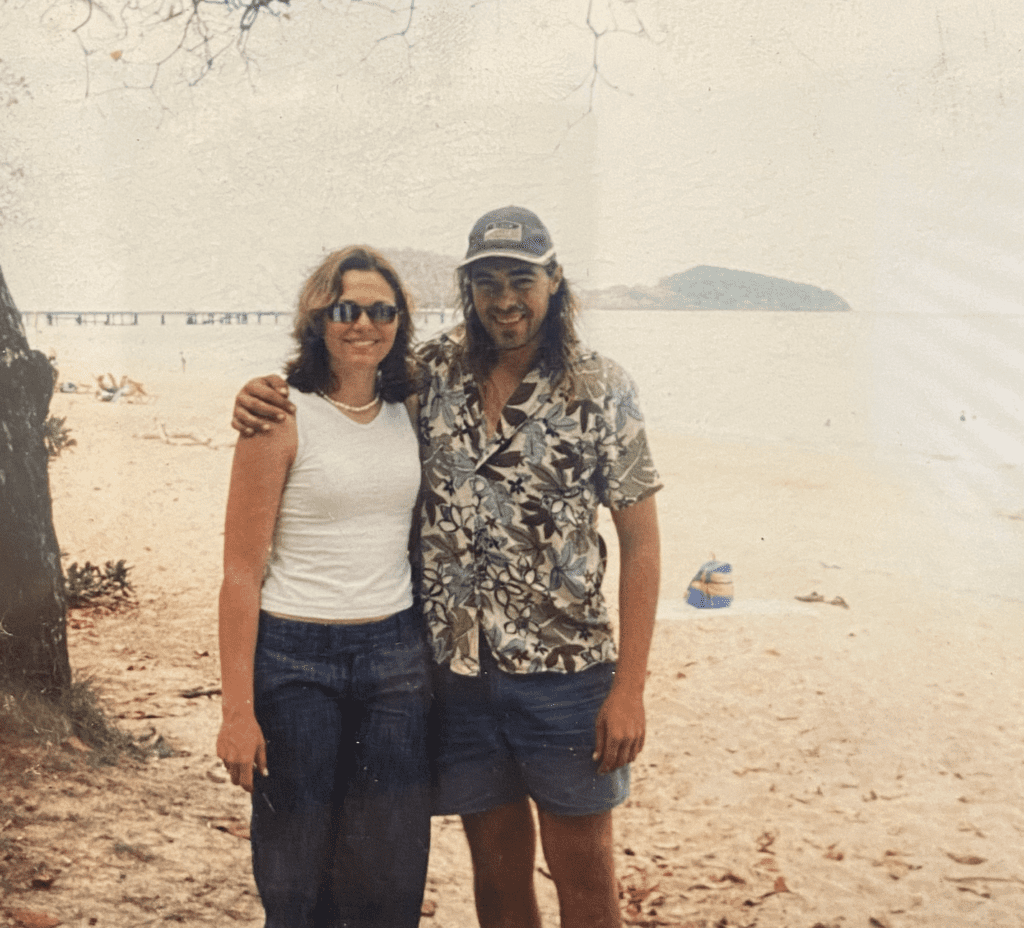
Jodi Frizzel is a psychotherapist and coach working with individuals ready to make real shifts in how they live, learn and relate. If something in this post resonated, visit innerworkings.au to explore working together.

Jodi Frizzel is a psychotherapist and coach who works with high-functioning individuals ready to make real shifts in how they live, learn and relate. With a Master of Psychotherapy and Counselling, Level 2 Resource Therapy training, and over twenty years across mental health, education and business leadership, Jodi brings both the depth of therapy and the direction of coaching into one integrated approach. Her clients don’t just gain insight, they learn to use it. Jodi works with individuals online across Australia and face to face in Nelson Bay, NSW.
